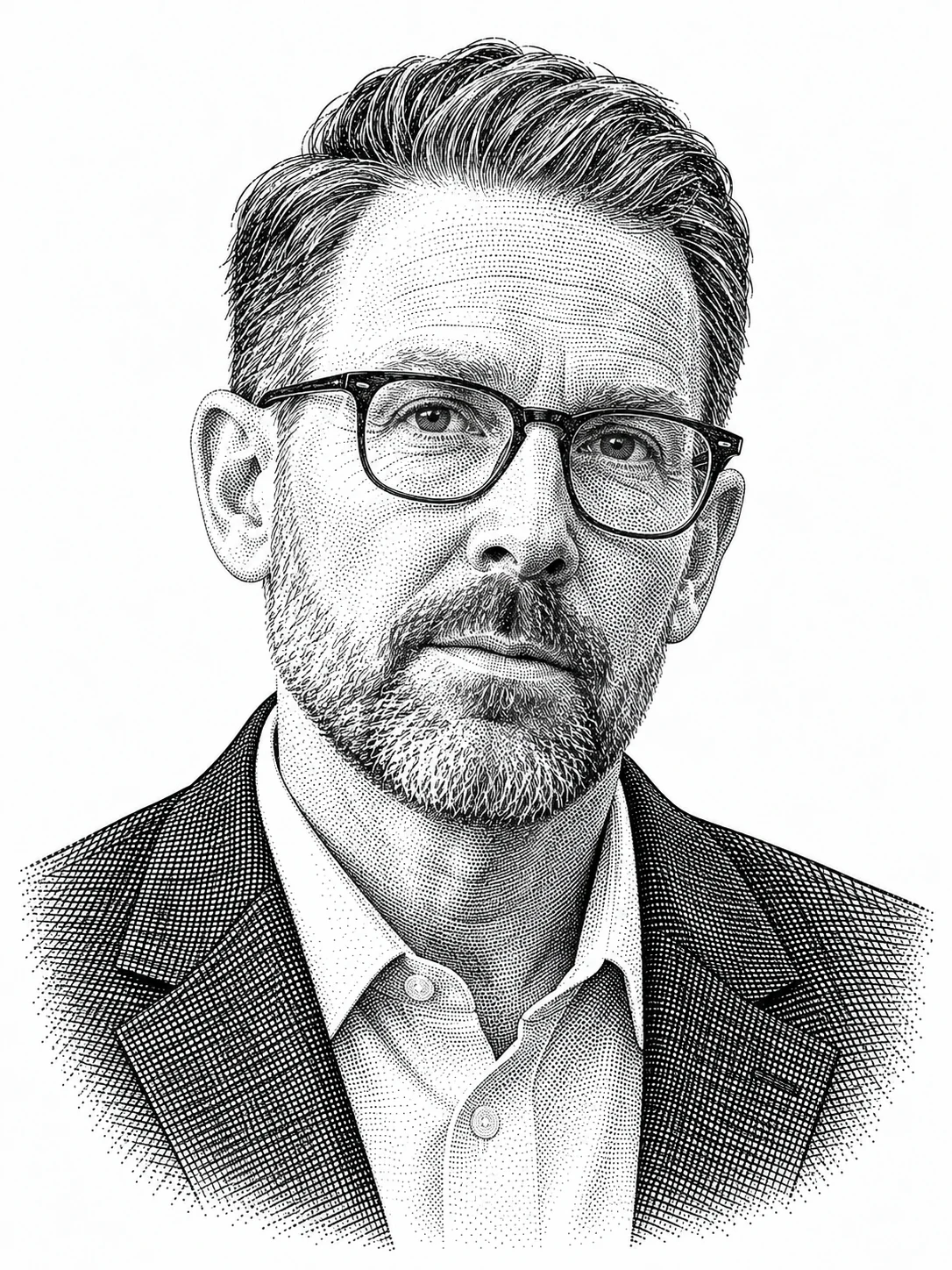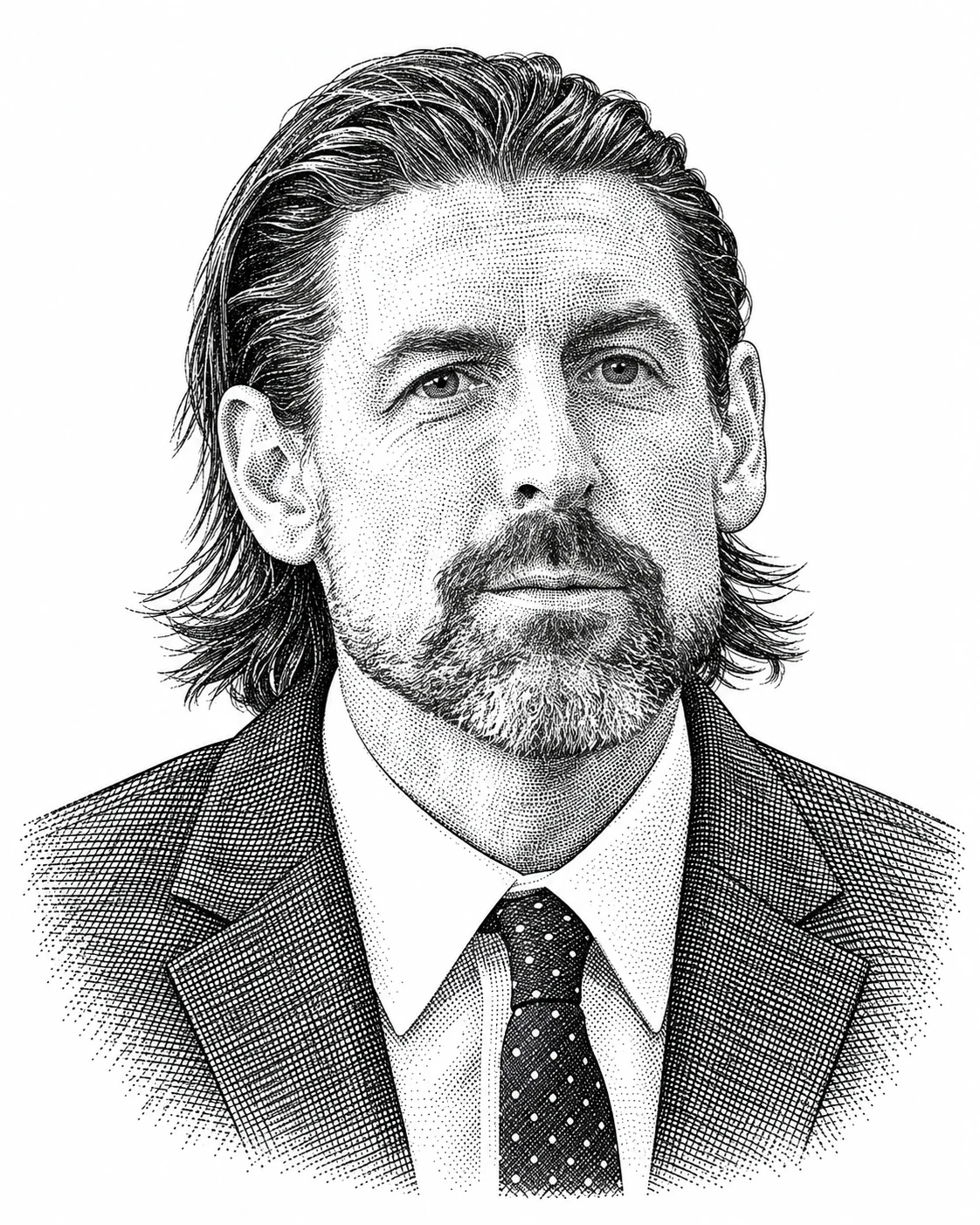
The person
Gansey is 43. He grew up in Olmsted Falls, outside Cleveland, and played college ball at St. Bonaventure and West Virginia, where he made first-team All-Big East. He went undrafted, lost his shot with the Miami Heat to a staph infection, and spent five years playing in Italy, Germany, Spain and the G League.
In 2011 he joined the Cavaliers as an intern. He ran their G League team and was named the league's Executive of the Year. He became assistant GM in 2017 and general manager in 2022, always under team president Koby Altman. Fifteen years in one building, and never once the person who made the final call. Philadelphia is his first time in that chair.
People who know him describe the same man. His high school coach says he was team-first to a fault. At Summer League he sat through every game with a notebook. When Bob Myers called Altman about him, Altman's answer was simple: he's "a basketball guy."
In Front Office Watch terms, he came through the apprenticeship door: years of scouting and grinding, no prior top job. And he doesn't sit alone at the top. He reports to Myers, the former Warriors GM who now runs sports for the ownership group and who says he weighs in on the biggest decisions.
The hand he inherited
Gansey took over a 45-37 team that had just been swept by the Knicks in the second round.
The pieces didn't line up. Tyrese Maxey, 25, was the organizing young star, with VJ Edgecombe, 20, coming up behind him. Joel Embiid, 32, was still central to the team's ceiling, but he had played only 96 of 246 regular-season games over the previous three seasons. Paul George, 36, was owed more than $110 million over two more years. With that much money committed, Philadelphia's free agency budget was a mid-level exception and minimum contracts.
FOW's phase call: Assemble. The Sixers had a rational organizing cornerstone in Maxey, while Embiid still mattered to the team's ceiling. In Assemble, the job is to build the environment that tests or supports a cornerstone bet—not merely accumulate talent.
Gansey's own read matched. "It's not a championship caliber team right now," he said on his first day. A month later: "We kind of need help at every position."
Defining decisions, so far
1. Paul George for Jaylen Brown (July 1). On June 8, Gansey named George as one of four players the Sixers would "maximize" and build around. Twenty-three days later he sent George, two first-round picks and two second-rounders to Boston for Brown.
- The alternative: ride out George's contract. According to The Ringer, that's the patient plan Gansey pitched his bosses when he interviewed. (The Ringer names no source.)
- What he got: a 29-year-old Finals MVP who played 71 games last season, for a 36-year-old with an injury history.
- What he risked: substantial future draft capital, and a star who, like Embiid, does much of his scoring in the mid-range.
2. LeBron James at the veteran minimum (agreed July 24, signed July 26). About $8 million over two years for one of the best players ever. Gansey credits the players as the main recruiters, and says the Brown trade is what got Philadelphia "in the mix."
- What he risked: very little money. The cost is basketball: a 41-year-old, and a fourth star who needs the ball.
3. Paying to fit under a hard cap (late July). Using the mid-level exception on Simons and Wade hard-capped Philadelphia at the first apron, a payroll line the team was not allowed to cross. To fit LeBron and Kentavious Caldwell-Pope under it, he waived Dalen Terry and traded Johni Broome plus a 2027 second-round pick to the Clippers.
- What he risked: another draft pick and two young players to add a veteran shooter. The cap was a rule; giving up Broome and the pick was the choice.
Add it up: two first-round picks and three second-round picks gone, and a roster built inside a hard cap.
The pattern
Listen to Gansey explain his summer and it sounds like a string of openings he couldn't have planned. The No. 22 pick "fell into our lap." On Brown: "You don't know what's going to happen." On LeBron: "I didn't know how it was going to go." He rarely describes the principles behind which opportunities are worth pursuing.
His moves show some emerging tendencies, though one summer isn't enough to call them a philosophy:
- Cheap on salary, expensive on picks. LeBron and Caldwell-Pope came at near-minimum money. Brown came at the cost of two firsts. Some of that is circumstance: with Embiid's and George's contracts on the books, he had little salary room to spend.
- Relationships open doors. He insisted on Jameer Nelson as his No. 2. He brought Dean Wade with him from Cleveland. In Cleveland, one league source credits his back-channel talks with helping land James Harden. Relationships, he says, are "very important in my position."
- He moves fast when a door opens. Boston lost the Giannis Antetokounmpo chase, Brown came loose, and Gansey had a deal within weeks.
Put together, we know how Gansey finds opportunities. He has even described the method: "I'm just going to pick up the phone, I'm going to try and get involved in everything I possibly can." What he hasn't explained, and what one summer can't show, is how he decides which opportunities to turn down.
The strongest case against that read. Maybe his reluctance to take credit is simply who he is. His brother calls him very humble; his coach says he never cared about credit. Maybe it's sensible discretion, since no executive wants to tip off rivals. And maybe the pivot was simply smart: Brown is young enough to matter next to Maxey and Edgecombe long after LeBron and Embiid are gone. If so, Gansey didn't give up on the future. He pulled it forward.
The FOW read
Gansey's words wandered. His moves stayed in phase.
He hasn't publicly explained the principles governing which opportunities are worth pursuing, so FOW supplies an independent standard: the phase. In Assemble, the job isn't just to add talent. It's to improve the team's ability to build a champion around its cornerstone. That raises the real question about this summer: was Gansey building around Maxey, or assembling one last run around Embiid?
His answer seems to be both. The Brown trade is the clearest example: an aging George out, a younger star in, one who can help Embiid now and still matter next to Maxey later. That's a strong Assemble move. It tries to extend the current window without spending the next one's centerpiece.
The cost is real, though: two first-round picks and three seconds, spent on a roster whose fit and health are unproven. Even the George reversal looks different through this lens. As a statement, it didn't last a month. As a move, it fit the phase.
So the talent is no longer the question. The question is whether Maxey, Brown, LeBron and Embiid can all be themselves with one basketball, and whether Embiid and LeBron can stay healthy long enough to find out.
- Strongest case: there is enough talent here to make the upside obvious.
- Main concern: a roster this talented can still become less than the sum of its parts, and health may keep Philadelphia from even getting a clean answer on the fit.
Our early read: favorable, with a price tag. Gansey made a defensible bet: use Brown to extend the current championship window without giving up the next one. The cost was considerable future flexibility, and whether it was worth it depends on more than this season's wins. We've seen strong evidence that he can acquire talent. We haven't yet seen how he decides what that talent is worth.
One caution on credit and blame. Myers says he weighs in on the biggest calls, so it isn't fully clear who decided what. And a 6–1 start tells us almost nothing. We're judging the decisions by whether they fit the situation when he made them, not by how they turn out.
Watch him now
Four decisions will tell us who Gansey is:
- The trade deadline. Does he spend more future picks to reinforce this group? If he does, what makes the return worth the cost, and what would make him walk away?
- If the fit fails. If Maxey, Brown, LeBron and Embiid still haven't settled into a closing group by the All-Star break, does he adapt, or keep defending the bet?
- Maxey's timeline. Do his next moves strengthen the long-term path around Maxey, or lean further on Embiid and LeBron's short window?
- Cheap young talent. Does he make room for Labaron Philon Jr. and other inexpensive players, or keep trading them away for immediate help? At the October scrimmage, he said the rookie will "take some time."
Gansey has shown he can find opportunities. By February, we'll start to learn which ones he's willing to pass up.